
If you’ve lived along the Wasatch Front for more than a few years, you’ve probably noticed the white, chalky buildup on your shower head, your faucets, or the inside of your kettle. That’s hard water, and it’s not just a cosmetic annoyance. It’s one of the biggest reasons water heaters in Salt Lake, Utah, Davis, and Weber counties fail years earlier than they’re rated to. We replace far more water heaters here than we would in a lot of other parts of the country, and hard water is the reason why more often than not.
The good news is that this is one of the more preventable plumbing problems out there. A little regular maintenance goes a long way toward getting the full lifespan out of your unit instead of replacing it at year seven when it should’ve lasted twelve or more.
Why Utah’s Water Is So Hard on Water Heaters
Utah’s water supply carries a high concentration of dissolved minerals, mainly calcium and magnesium. Depending on where you are along the Wasatch Front, water hardness can run well above the national average. Every time your water heater heats water, those minerals separate out and settle to the bottom of the tank as sediment.
Over time, that sediment layer builds up and hardens. It’s not just sitting there harmlessly. It acts as an insulating layer between your burner or heating element and the water above it, forcing your unit to work harder and longer to reach the same temperature. That extra strain shows up in a few predictable ways: higher energy bills, a shorter lifespan for the tank itself, and in gas units, a popping or rumbling sound as water gets trapped underneath the sediment layer and boils.
Signs Sediment Buildup Is Already a Problem
- Popping, cracking, or rumbling noises coming from the tank, especially right after the burner kicks on. This is trapped water boiling underneath hardened sediment.
- Longer wait times for hot water, or hot water that doesn’t last as long as it used to.
- Rusty or discolored water coming from your hot water tap specifically, which can point to a tank that’s starting to corrode from the inside.
- Higher gas or electric bills without an obvious explanation, especially if your usage habits haven’t changed.
- Reduced hot water pressure, which can happen when sediment partially blocks the outlet at the top of the tank.
- Visible buildup or a milky residue on dishes or glassware after they come out of the dishwasher.
If you’re noticing more than one of these at once, there’s a good chance your tank has a meaningful sediment layer that’s been building for a while.
How Often Should You Flush Your Water Heater?
For most homes on Utah’s hard water, we recommend flushing the tank at least once a year, and every six months if you’re on the higher end of the water hardness scale or you’ve never had it done before. If it’s been more than two or three years since your last flush, don’t be surprised if a good amount of sediment comes out. That’s normal, and it’s exactly why the flush matters.
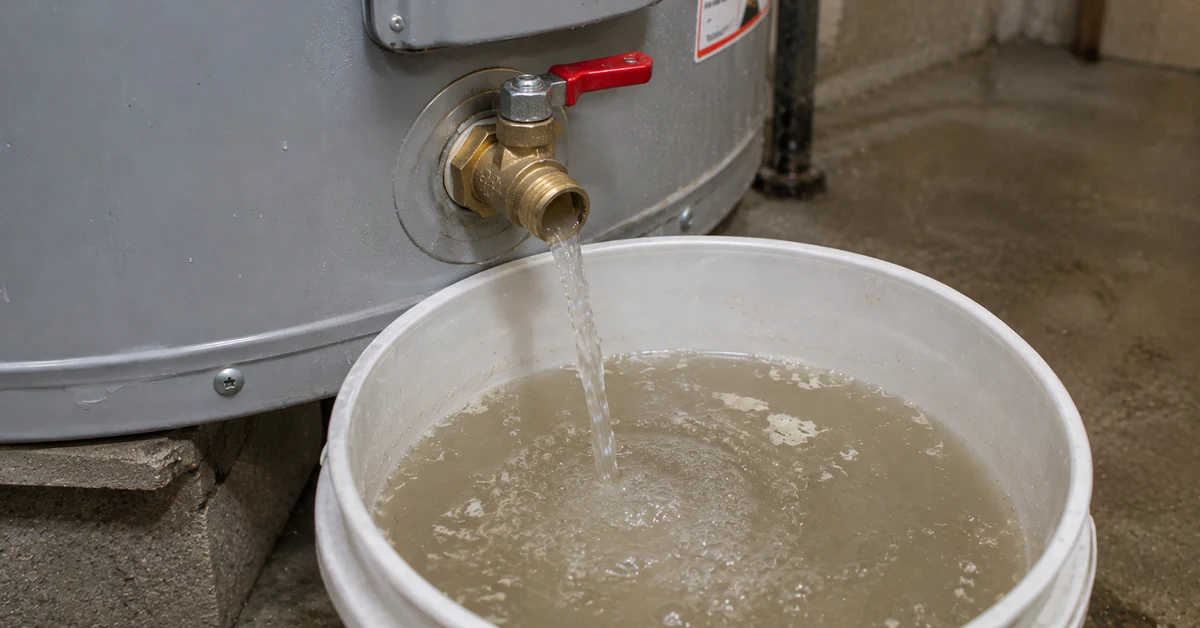
What a Flush Actually Involves
- Turn off the power (electric units) or set the gas valve to pilot, and let the water cool if it’s been recently used. This isn’t a job to do with scalding water in the tank.
- Shut off the cold water supply valve feeding the tank.
- Connect a hose to the drain valve near the bottom of the tank and run it to a floor drain or outside.
- Open the drain valve and let the tank empty, opening a hot water tap somewhere in the house to help it drain and to prevent a vacuum lock.
- Briefly turn the cold water supply back on to stir up and flush out remaining sediment, then drain again until the water runs clear.
- Close the drain valve, refill the tank, and restore power or the gas setting once it’s confirmed full.
This is a job plenty of homeowners handle themselves, and if you’re comfortable with it, it’s worth doing on schedule. That said, if your unit has never been flushed and you’re not sure how much sediment has built up, or the drain valve is old and you’re worried about it seizing up or breaking, it’s a reasonable one to hand off to a plumber rather than risk a valve failure mid-flush.
Beyond Flushing: Other Ways to Extend Water Heater Life
- Consider a water softener. This addresses the root cause rather than just managing the symptom. A whole-home softener reduces mineral content before it ever reaches your water heater, which means less sediment buildup across your entire plumbing system, not just the tank.
- Check the anode rod every couple of years. This sacrificial rod attracts corrosive elements in the water so your tank doesn’t. In hard water areas, anode rods often wear out faster and need replacing sooner than the manufacturer’s general recommendation.
- Set the temperature appropriately. 120°F is typically the recommended setting according to the U.S. Department of Energy, hot enough to be effective and safe, without unnecessarily accelerating mineral buildup and energy use.
- Test the pressure relief valve annually. This is a safety component, not a maintenance-for-longevity item, but it’s often overlooked during general water heater upkeep and it’s worth checking while you’re already flushing the tank.
When Flushing Isn’t Enough Anymore
If your water heater is already past ten years old and showing multiple signs of sediment buildup, flushing at that point may help a little, but it’s not going to reverse years of accumulated damage. Hardened, compacted sediment that’s been sitting for years doesn’t always fully break loose with a standard flush, and in some cases attempting an aggressive flush on a very old tank can expose weak spots and cause a leak that wasn’t there before.
At that stage, it’s worth having someone take an honest look and tell you whether you’re better off continuing to maintain the existing unit or replacing it. Tank-style water heaters typically last eight to twelve years, and hard water tends to push homes here toward the shorter end of that range without regular maintenance. A tank-less system is also worth considering if you’re due for a replacement. They still need periodic descaling in hard water areas, but they avoid the sediment in a tank problem entirely.
Get More Years Out of Your Water Heater. A yearly flush is a small task that makes a real difference here, given how hard Utah’s water actually is. If it’s been a while since yours was serviced, or you’re hearing popping sounds or noticing rusty hot water, give Drain Kingz a call and we’ll take a look and help you get ahead of a bigger problem.