
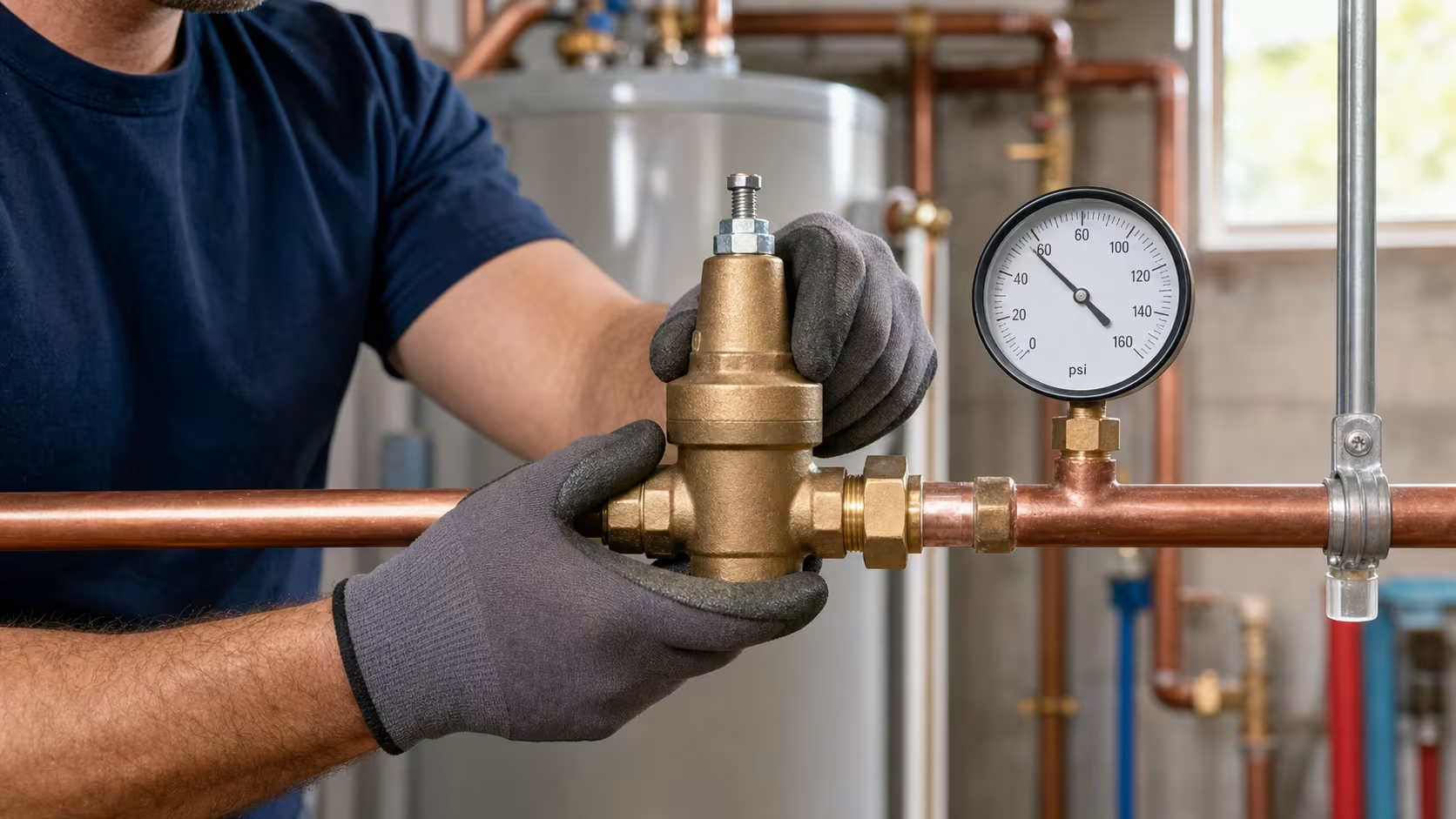
Is Your Water Pressure Too High? A Wasatch Front Guide to PRVs
Most homeowners worry about water pressure that is too low. A weak shower gets noticed fast. Pressure that runs too high is sneakier, and along the Wasatch Front we see it cause real damage in homes where nobody suspected a thing. It shortens the life of your appliances, wears out faucet parts, and sets the stage for leaks you never wanted.
The good news: high water pressure is one of the easier plumbing problems to catch and fix. This guide covers what normal pressure looks like, the warning signs, and how a small brass valve called a pressure reducing valve (PRV) keeps your whole system safe.
What "normal" pressure looks like, and why Utah homes vary so much
For a typical home, plumbers aim for water pressure in the 40 to 80 psi range, with somewhere around 60 psi being the comfortable sweet spot. Once you climb past 80 psi, you are in territory that starts to stress pipes, joints, and appliances.
Utah is a special case. Our cities pull water from mountain reservoirs and store it in tanks set high on the benches and foothills, then deliver it through “pressure zones.” Your static pressure depends heavily on where your house sits relative to the tank feeding your zone. A home lower in its zone, closer to the valley floor, can end up with a lot of pressure pushing on it, because gravity does the work. As Roto-Rooter notes for Salt Lake City, the mix of mountains, benches, and valley floor makes pressure anything but consistent from one neighborhood to the next. Utility groups like the Rural Water Association of Utah manage these zones on purpose, which is why two homes a mile apart can feel completely different at the tap.
The takeaway: you cannot assume your pressure is fine just because your neighbor’s is. You have to measure it.
Warning signs your water pressure is too high
We get called out for these symptoms all the time, and pressure is a common culprit:
- Banging or knocking pipes (water hammer). That loud thud when a faucet or washing machine valve shuts off is often high pressure slamming to a stop.
- Faucets that drip again right after a repair. If you replace a washer or cartridge and it fails within months, excess pressure is usually chewing it up.
- A toilet that randomly runs or hisses. High pressure can force water past the fill valve and flapper.
- Short appliance life. Dishwashers, washing machines, and water heaters take a beating from pressure they were never designed to handle.
- Spitting or sputtering faucets and hard-to-control flow.
If you are seeing two or more of these, it is worth a pressure test before you keep replacing parts.
What high pressure quietly costs you
The damage from high pressure is rarely one dramatic event. It is a slow tax on everything water touches. Over time, pressure above 80 psi wears on pipe joints, faucet cartridges, toilet fill valves, washing machine hoses, and water heater components, and it raises the odds of a hidden leak behind a wall or under a sink.
That is why we treat pressure as a leak-prevention issue, not just a comfort issue. A burst washing machine hose or a slow leak inside a wall can do thousands of dollars of damage. If you have chased mystery moisture or wet spots, high pressure belongs on the suspect list, and our leak detection team checks it as part of the workup. Your water heater is especially sensitive, since constant high pressure strains the tank and its safety parts.
The fix: a pressure reducing valve (PRV)
The standard solution is a pressure reducing valve, a bell-shaped brass fitting installed on the main line where water enters your home. It automatically knocks incoming pressure down to a safe, steady level (commonly set around 50 to 60 psi) no matter what the street is doing.
This is not just a nice upgrade. Model plumbing codes, including both the International Plumbing Code and the Uniform Plumbing Code, call for a pressure reducing valve whenever the static pressure coming into a home exceeds 80 psi. You can read the requirement spelled out in IAPMO’s Uniform Plumbing Code spotlight on Section 608.2. Utah cities build on these model codes, so if your street pressure runs hot, a PRV is generally what the code expects, not just a good idea. As a general rule this holds across the Wasatch Front, but exact adoption and amendments vary by city, so confirm the specifics with your local building department if you are permitting work.
PRVs also wear out. Most last somewhere in the range of 10 to 15 years, and sometimes less if pressure swings a lot. When one fails, pressure can climb, drop, or bounce around unpredictably, so a valve that is more than a decade old is worth checking. Replacing a standard PRV is usually a straightforward job, though the cost varies based on valve size, how accessible the location is, and whether related work is needed at the same time. Our residential plumbing crew handles both new installs and replacements.
When a PRV needs an expansion tank too
Here is a detail that trips people up. Once a PRV is in place, it creates a “closed” plumbing system. When your water heater fires up and the water expands, that extra pressure has nowhere to go, which can spike pressure and stress the tank. For that reason, the plumbing code pairs a PRV with a thermal expansion tank on the cold water line near the water heater. Manufacturers like Watts explain this in their PRV FAQ. If your home has a PRV but no expansion tank, that is a gap worth closing.
How to check your own pressure
You can get a quick read with an inexpensive water pressure gauge from any hardware store. Screw it onto an outside hose bibb or your washing machine faucet, turn the water on all the way, and look at the needle. Anything consistently above 80 psi means it is time to act. Test at different times of day if you can, since municipal pressure can shift.
If the number comes back high, or if you are already fighting water hammer, dripping fixtures, or short appliance life, we are happy to test it properly and talk through your options across Salt Lake, Utah, Davis, and Weber counties.
FAQ
What is a safe water pressure for a home? Between 40 and 80 psi, with around 60 psi being ideal. Above 80 psi, the plumbing code calls for a pressure reducing valve.
Can high water pressure really damage my plumbing? Yes. Sustained high pressure wears out faucet parts, toilet fill valves, and appliance components, and it increases the risk of leaks and burst hoses.
How long does a pressure reducing valve last? Often 10 to 15 years, sometimes less if pressure fluctuates a lot. If yours is older and your pressure feels off, it is worth checking.
Why is my water pressure high when my neighbor’s is fine? Wasatch Front pressure depends on your home’s elevation within its water pressure zone. Homes lower in a zone often get more pressure. The only way to know yours is to measure it.