
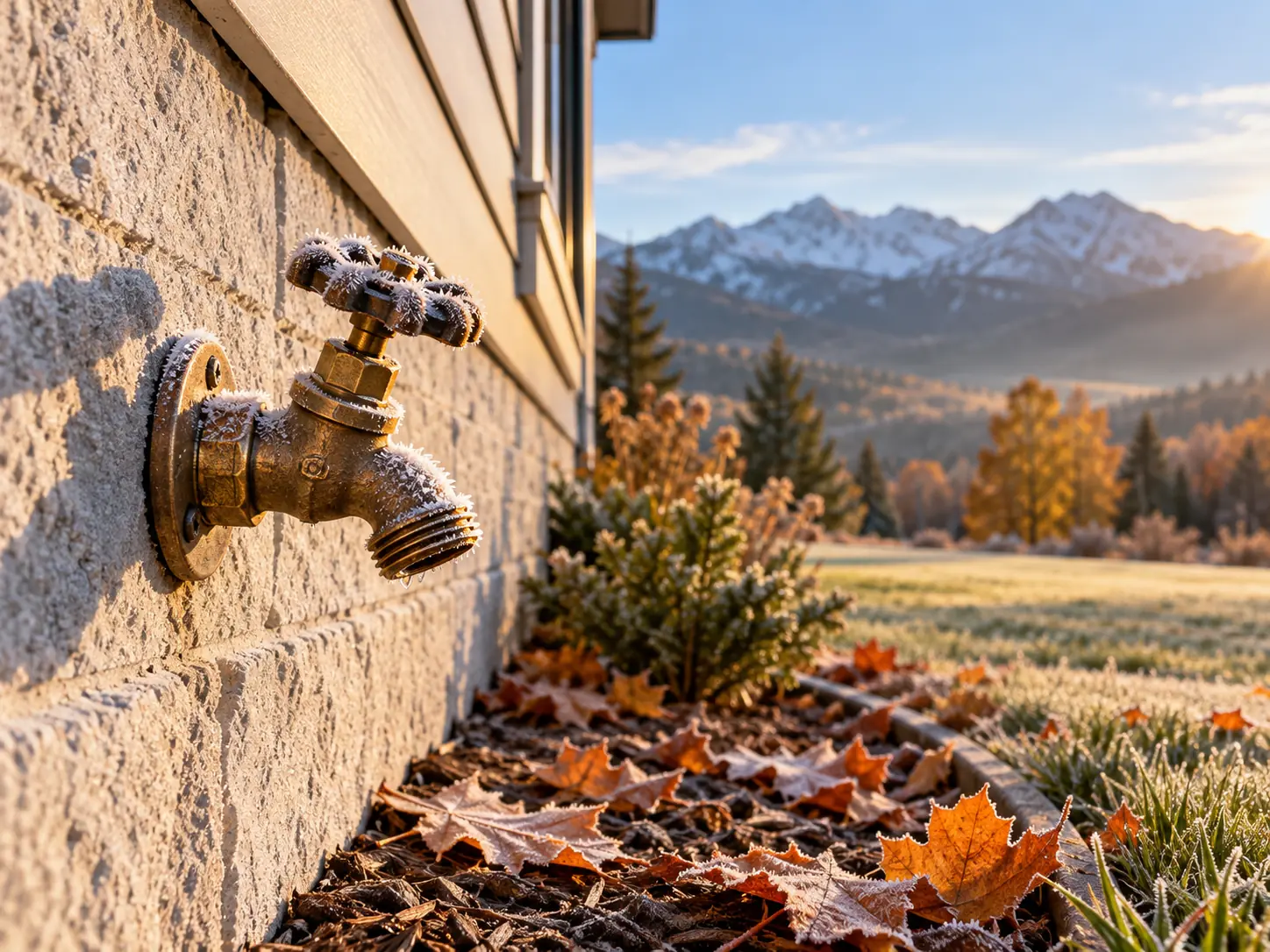
It’s still warm enough in Sandy, Draper, and out toward Lehi and Provo that most people aren’t thinking about frozen pipes. That’s exactly the point of this post: the work that actually prevents a frozen or burst pipe in January has to happen weeks before the cold shows up, not the night before the first freeze warning. We put together this checklist every year around this time because the calls we get in December are, almost without exception, for problems that were fixable in October.
Utah’s swing from hot, dry summers into hard winter freezes is rough on plumbing in a way that milder climates don’t deal with. Pipes that were fine all summer can develop small cracks or weak joints from ground movement and temperature shifts, and you won’t know it until the first freeze finds that weak spot. Here’s what’s worth checking now, while there’s still time to actually fix anything you find.
Start Outside: Hose Bibs and Sprinkler Systems
Your outdoor spigots are usually the first casualty of an early freeze, and they’re also the easiest thing on this list to prevent.
- Disconnect and drain garden hoses before the first freeze, and store them somewhere they won’t get brittle over winter.
- Shut off the water supply to outdoor hose bibs at the interior valve if your home has one, then open the outside spigot to drain any remaining water.
- Install insulated hose bib covers on any spigot that doesn’t have a frost-free design. They’re inexpensive and take about thirty seconds per spigot.
- Blow out your sprinkler system before the ground freezes. This is one we genuinely recommend hiring out if you don’t have a compressor rated for it. A system that isn’t fully blown out can crack lines and valves that you won’t discover until you turn the system back on in spring.
Check Your Water Heater Before You Need It Most
Fall is a good time to give your water heater some attention, mostly because nobody wants to discover a failing unit on the coldest morning of the year.
- Flush a few gallons from the drain valve to clear out sediment that’s settled at the bottom of the tank. Utah’s hard water means this builds up faster here than in a lot of other places.
- Check the temperature setting. 120°F is usually the sweet spot for safety and efficiency.
- Look around the base of the unit for any signs of moisture or rust, which can point to a slow leak worth addressing before it becomes a bigger one.
- If your water heater is pushing 10-12 years old, fall is a smart time to have it evaluated rather than finding out it’s failing in the middle of winter.
Inspect Exposed and Vulnerable Pipes
Not every pipe in your house is equally at risk. The ones in unheated or semi-heated spaces are the ones that actually freeze.
- Crawl spaces, unfinished basements, and garages are the usual trouble spots. Pipes running through these areas benefit from foam pipe insulation, which is cheap and simple to install yourself.
- Check under kitchen and bathroom sinks that sit against exterior walls. On especially cold nights, opening the cabinet doors lets warm household air reach the pipes.
- If you know a specific pipe has frozen in past winters, it’s worth adding heat tape now rather than waiting until you’re dealing with a burst pipe in the cold.
- Seal any gaps or cracks in your foundation or exterior walls near pipe penetrations. Cold air finding its way in through a small gap is often the real cause behind a “random” frozen pipe.
Give Your Sewer Line Some Attention Before Winter
This is the one homeowners skip most often, and it’s arguably the most important item on this list if your home has any history of drain issues.
Fall is when falling leaves and dying tree roots put extra strain on sewer lines, especially in older neighborhoods around Salt Lake City, Millcreek, and Holladay where mature trees sit close to the sewer line. Roots that have been growing into small cracks all summer tend to get more aggressive in fall as trees pull in extra moisture before winter dormancy. If you’ve had root intrusion before, or you’ve noticed slow drains anywhere in the house, a camera inspection now can catch a developing problem while it’s still a simple fix rather than a frozen, backed-up mess in January.
This is also a good time for a full drain cleaning if it’s been a year or more since your last one. Buildup that’s been slowly narrowing your pipes all year becomes a bigger problem once your household is running more hot water and doing more indoor cooking through the colder months.
Don’t Forget the Little Things Inside the House
- Locate your main water shut-off valve and make sure it turns freely. If a pipe does freeze or burst this winter, knowing exactly where this is and confirming it works saves you critical minutes.
- Check for any slow drips at faucets or visible fittings. A drip that’s a minor annoyance in September can freeze solid and crack a fitting in January.
- If you’ll be away from home for extended periods this winter, know how to keep the house heated to at least 55°F, or have someone check on it, and consider leaving cabinet doors open under sinks on exterior walls during cold snaps.
- Test your sump pump if you have one, especially before the wetter, colder months when you’re more likely to actually need it.
Why This Matters More in Utah Than People Expect
A lot of homeowners who move here from milder climates underestimate how fast temperatures swing along the Wasatch Front, and how much that stresses pipes and joints that were installed without accounting for it. You can check current freeze and winter weather advisories for the Salt Lake area from the National Weather Service to know when it’s time to act. We see a real spike in emergency calls every year in the first hard freeze of the season, and almost all of them trace back to something on this list that could’ve been handled in September or October with an hour of work.
None of this requires a plumber for every item. Plenty of it is genuinely DIY-friendly. But if you’re not sure whether your sewer line will hold up to another Utah winter, or it’s been a while since anyone’s actually looked at your water heater or your exposed pipes, that’s exactly what we’re here for.
Get Ahead of Winter While There’s Still Time. The best time to deal with a plumbing weak spot is before it’s frozen, backed up, or flooding your basement. If you want a second set of eyes on your pipes, water heater, or sewer line before the cold sets in, give Drain Kingz a call and we’ll help you head into winter with one less thing to worry about.
Finding a site that balances fun and fairness is rare but I found it here. The withdrawal times are incredibly fast and I never had any issues with my account. Explore aubetebet and discover why so many players are switching over.