
Why Your Summer Water Bill Spiked: How to Find a Hidden Water Leak in Your Utah Home
You opened your water bill, and the number made you look twice. Nothing about your routine changed, but the total jumped. Before you blame a billing error or a rate hike, there is a good chance the real culprit is a hidden water leak somewhere in your home. We track these down year round, but summer is when they tend to surface, and here on the Wasatch Front they cost you more than money.
The frustrating part is that most hidden leaks are silent. No dripping faucet, no puddle on the floor, just a meter that keeps spinning and a bill that keeps climbing. The good news is that a few minutes and a simple test can tell you whether you have one before it does real damage.
Why a hidden leak costs more during a Utah drought
Utah has spent the summer of 2026 in drought, with the entire state under drought conditions according to the Utah Division of Water Resources. When water is tight and rates go up, a leak you cannot see quietly runs up your bill and wastes a resource the whole state is trying to stretch.
The scale is bigger than most people think. The U.S. Environmental Protection Agency estimates that the average household’s leaks waste nearly 10,000 gallons of water every year, and that about 10 percent of homes have leaks wasting 90 gallons or more per day. Fixing the easy ones can cut roughly 10 percent off a water bill, which you can read on the EPA’s Fix a Leak Week page. In a drought summer, that is real savings.
There is a local wrinkle too. Close to 60 percent of residential water use in Utah goes to the landscape, according to the state’s Slow the Flow program. That means a leaking hose bib or cracked sprinkler line can hide inside an already high summer bill and be easy to overlook.
Warning signs of a hidden water leak
Hidden leaks rarely announce themselves, but they do leave clues. In our experience, these are the ones worth paying attention to:
- A water bill that climbs with no change in how you use water
- The sound of water running when every fixture is off
- A warm or damp spot on a floor, which can point to a hot water line under the slab
- A musty or mildew smell in a cabinet, basement, or closet
- Peeling paint, stained drywall, or a soft spot on a ceiling
- Water pressure that has dropped for no clear reason
- One patch of lawn that stays greener or soggier than the rest
Any one of these on its own might be nothing. Two or three together usually mean water is going somewhere it should not.
The 10-minute water meter test
Here is the simplest way to confirm a leak, and it costs nothing. Your water meter can tell on a leak even when you cannot see it.
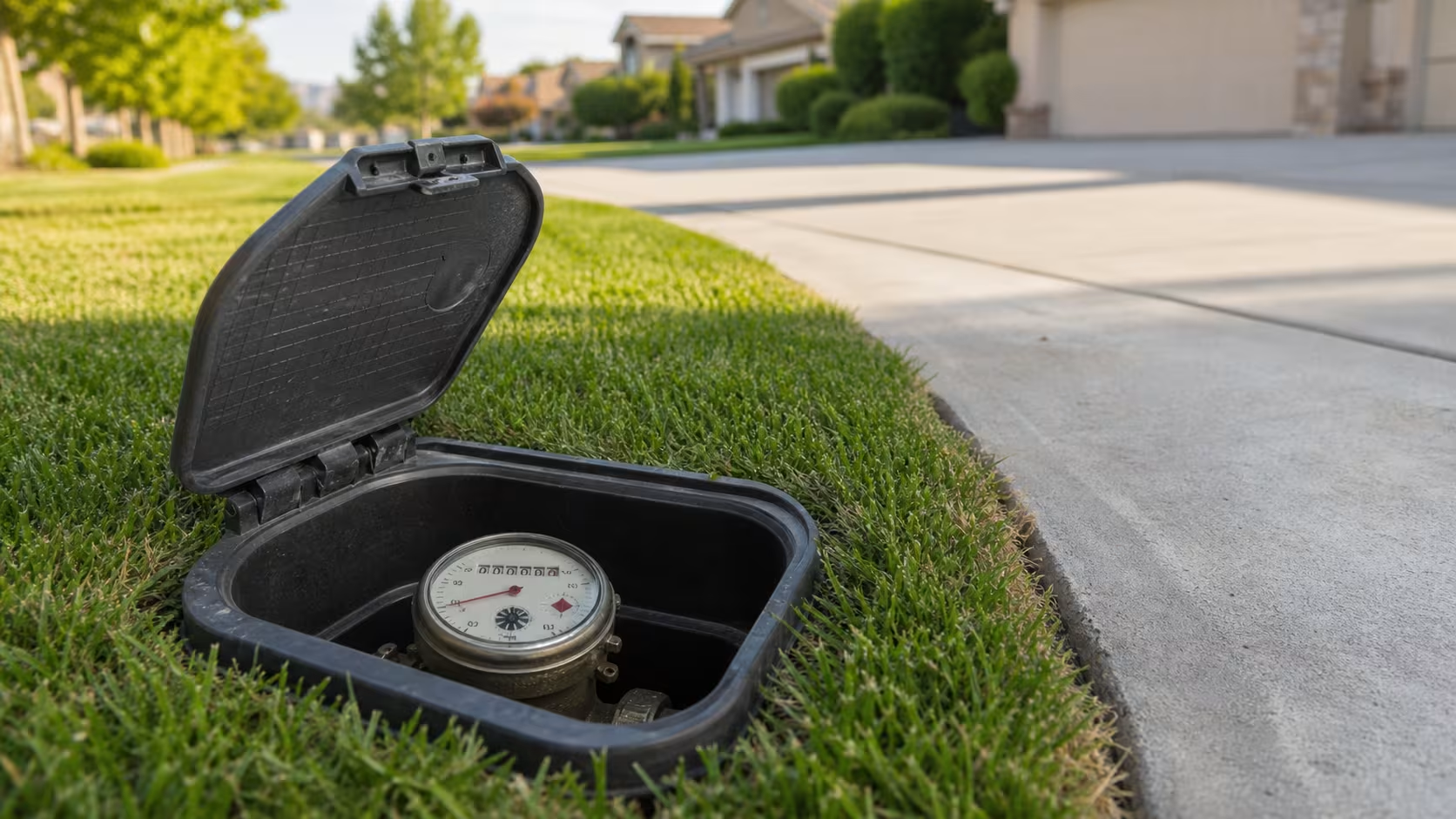
First, shut off every water fixture and appliance in the house. No running faucets, no ice maker, no irrigation, no washing machine. Next, find your meter. In most Wasatch Front homes it sits in a covered box near the curb or park strip, and in some it is in the basement. Lift the lid and look at the dial. Many meters have a small triangle, gear, or star called a low flow indicator that spins when even a trickle of water is moving.
With all the water off, watch that indicator. If it is turning, water is flowing somewhere, which means a leak. If it is still, write down the meter reading, wait one to two hours without using any water, then check it again. A number that changed while the house sat idle confirms a leak you cannot see.
Where hidden leaks like to hide
Once you know you have a leak, the next step is finding where. These are the usual suspects, roughly in order of how often we find them.
Toilets. A worn flapper is the single most common silent leak, and a bad one can waste hundreds of gallons a day without a sound. To test, put a few drops of food coloring in the tank and wait 15 minutes without flushing. If color shows up in the bowl, the flapper is leaking.
The water heater. Tanks fail from the inside out, and Utah’s hard water speeds that along by building sediment that corrodes the tank. A slow seep from the tank, the drain valve, or the temperature and pressure relief line can hide in a utility closet for weeks. If your unit is showing its age or you spot moisture around the base, our water heater repair and replacement team can check it before it lets go.
Supply lines and faucets. The flexible hoses under sinks and behind the fridge, plus worn faucet cartridges, are easy to miss until a cabinet floor swells or warps.
Outdoor fixtures. Hose bibs, spigots, and secondary or sprinkler lines crack over time, and a leak out there blends right into summer irrigation.
When it is not a simple fixture
Some leaks are not behind a cabinet at all. A slab leak, or a break in the buried water line running from your meter to the house, will not show up as a dripping fixture. It will keep your meter spinning, soak into the ground, and over time can undermine a foundation, patio, or driveway. Buried supply lines age, shift, and corrode over decades, and older Wasatch Front homes are more likely to have lines that have reached that stage.
These are the leaks where guessing gets expensive fast. Opening the wrong wall or digging the wrong stretch of yard wastes time and money, which is exactly where professional leak detection earns its keep.
How we find and fix hidden leaks
Our goal is to pinpoint a leak before anyone opens a wall or breaks ground. We start with the clues you have gathered, then use meter analysis and acoustic listening equipment to narrow the location. When the concern is on the drain or sewer side rather than the pressurized supply, a sewer line repair evaluation and camera inspection let us see inside the line instead of guessing.
Once we know where the water is escaping, the repair is targeted rather than exploratory. The right approach and the cost vary based on where the leak is, how deep it runs, and how easy it is to reach, so we locate it first and walk you through the options before any work begins. Catching a leak at the meter-test stage almost always beats waiting for a stain on the ceiling.
FAQ
How do I know if I have a hidden water leak? The fastest check is the meter test. Turn off all water, watch the low flow indicator on your meter, or note the reading and recheck it an hour or two later with no water use. If it moved, you have a leak somewhere in the system.
Can a running toilet really raise my bill that much? Yes. A leaking toilet flapper is the most common silent leak we find, and a bad one can waste hundreds of gallons a day. A quick food coloring test in the tank will tell you if yours is the problem.
Is a soggy or extra green spot in my yard a water leak? It can be. It might be an irrigation line, but it can also be the buried supply line between your meter and the house. If the wet spot appears when your sprinklers are off, it is worth having the line checked.
How much does leak detection cost? It varies based on the type of leak, where it is, and how hard it is to access. We locate the leak first so you know what you are dealing with before committing to any repair.